William (Tripp) Jennings

Alex Meyers

Sri Saikrishnan
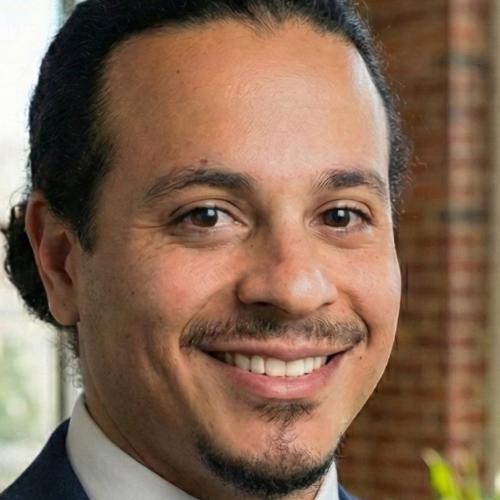
Philip David

Linde Winton
Linde Winton is the Senior Director of Operations for Provider Partners Health Plan and a healthcare executive with nearly four decades of experience in managed care, Medicare Advantage, compliance, claims administration, and payment integrity. Throughout her career, she has led operational, compliance, quality assurance, audit, and Special Investigation Unit (SIU) programs for health plans, third-party administrators, and healthcare technology organizations.
Linde has extensive expertise in payment integrity, fraud, waste and abuse prevention, regulatory compliance, claims operations, vendor oversight, and healthcare analytics. She has developed and implemented enterprise-wide audit and investigation programs, directed complex regulatory initiatives, overseen large-scale operational improvements, and partnered with organizations to strengthen payment accuracy while maintaining compliance with evolving federal and state requirements.
Recognized for her ability to bridge the gap between operational execution and regulatory oversight, Linde brings a practical, real-world perspective to healthcare payment integrity. Her work has focused on identifying emerging risks, improving claims accuracy, leveraging data analytics to uncover hidden issues, and implementing sustainable solutions that drive measurable results. As a frequent collaborator across operations, compliance, and payment integrity teams, she is passionate about helping organizations navigate today's increasingly complex healthcare environment while protecting the integrity of healthcare payments.

Diane Nguyen

Brian Dunn
Brian Dunn serves as the Inspector General for the Illinois Department of Healthcare and Family Services, where he oversees program integrity efforts for the state’s $37 billion Medicaid program. In this role, he directs criminal and civil investigations, audits, and compliance reviews, and the data analysis that supports this work. Prior to this, Brian served as First Deputy Inspector General and General Counsel for the City of Chicago’s Office of Inspector General. Before leading government oversight work, Brian’s legal career included serving as the General Counsel for the Illinois Department of Human Services and the Illinois Department of Commerce and Economic Opportunity, a litigation associate for a global law firm, and a law clerk for a federal district judge.

Melissa McCabe

Neeraj Jaiman
Director of Medical Economics with accountability for total cost of care analytics and payment integrity insights across Commercial and Medicare lines of business. Leads advanced analytics to identify key cost drivers, quantify unit cost and utilization trends, and detect payment leakage through contract accuracy, coding, and claims anomaly analysis. Trusted partner to senior leadership on data‑driven strategies that improve affordability, financial performance, and provider accountability. Spearheading the development of payment integrity benchmarks, advanced coding intensity models, and enterprise strategies to mitigate coding intensity through levers such as material change clauses and alternative payment models, including global payments.